


 Track sales pipeline & optimize leads





Every early-stage entrepreneur relies on manual tracking methods when launching a business. However, managing client data across unorganized spreadsheets, disconnected personal email accounts, and loose notes eventually creates massive communication bottlenecks. Implementing a dedicated free CRM allows startups to centralize their customer data without adding monthly financial overhead to their balance sheet.
Using basic, free customer relationship management software for small businesses streamlines administrative clutter by creating a single digital space for user profiles, interaction histories, and outstanding tasks. It acts as an operational foundation that allows small teams to keep their contacts organized, clean up their lead data, and focus on steady revenue generation without an upfront software commitment. Transitioning to an entry-level platform ensures that early-stage ventures can scale their client outreach securely.
 Our top picks for June 2026
 9.8
9.8

 Lead & pipeline management
Types of Free CRM Systems: Freemium vs. Free Trials
When hunting for free CRM software for small business, it is vital to understand how software vendors structure their zero-cost offerings to ensure you select a configuration that aligns with your active sales volume.
Permanent Freemium CRM Tiers
Many leading providers offer a perpetual free CRM for small business model. These entry-level packages never expire, making them highly popular for micro-companies or solo operators who need basic data storage. Platforms offer these basic versions to help you manage core data while keeping your operational database CRM free. It is a practical path to explore simple data fields without financial risk.
Premium CRM Free Trials
If your company manages complex sales cycles, a standard freemium model may feel too restrictive for your daily operations. In these scenarios, utilizing full-featured free trial periods from top-tier providers is often a more profitable strategy. These short-term options give your team unrestricted access to advanced automated features, enabling you to thoroughly test comprehensive platforms before deciding to purchase a license.
What to Expect: The Free CRM Implementation Timeline
Deploying an entry-level platform into your daily business operations follows a straightforward, multi-stage setup trajectory:
- Days 1–3 (Initial Data Migration): Your team will clean up existing customer records, eliminate duplicate email fields, and import standard CSV files directly into your new free client management software.
- Days 4–7 (Pipeline and Funnel Creation): This phase involves building simple stages to track incoming inquiries, mapping a basic free sales funnel, and connecting your primary business email accounts to automatically log communication history.
- Weeks 2–4 (Team Adoption and Tracking): Training your staff to consistently update lead profiles in your free small-business CRM tools ensures your database remains accurate, actionable, and capable of generating clean pipeline reports.
Potential Downsides and Functional Constraints of Free CRM Tools
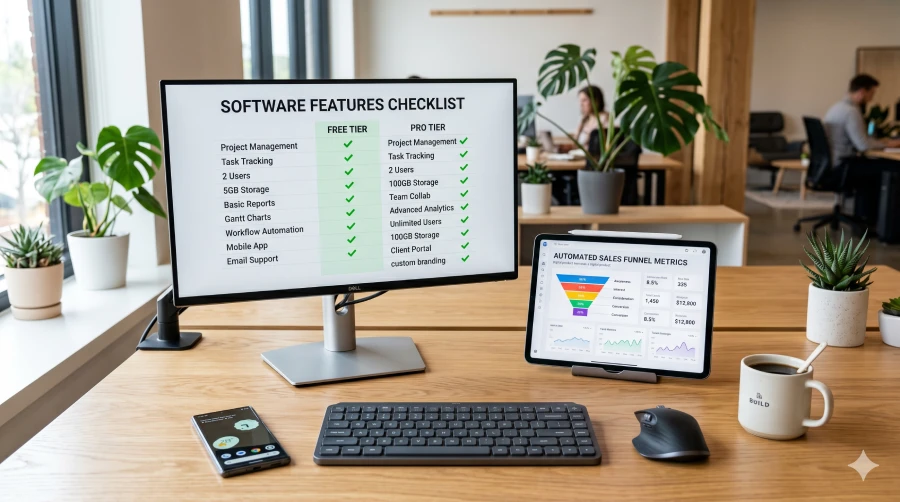
While building your business operations around a completely free software layout can save upfront capital, expanding business owners must remain aware of critical structural ceilings that can block long-term commercial growth:
- Strict Seat and User Constraints: The vast majority of free CRM systems limit platform access to a single or two users. If your sales or customer support team expands, you will hit a functional wall that requires an immediate paid upgrade to keep working.
- Zero Advanced Automation Capabilities: Basic plans rarely include native workflow tools. If you need a functional free leads funnel that automatically triggers follow-up emails, assigns tasks to specific staff members, or tracks complex multi-stage deals, entry-level platforms often leave you running those steps manually.
- Siloed Lead Tracking Frameworks: Standalone free CRM systems and small-business configurations often lack open integration options. Using an isolated free-lead software setup means your sales data cannot communicate natively with your accounting apps or external website forms, forcing employees to spend hours manually copying data back and forth.
Cost Analysis: Evaluating Free CRM Value Against Paid Options
Determining the real financial value means weighing the administrative time you are giving up against the savings from monthly subscription fees.
- Free Leads Management Values: Relying on standard CRM for small business free packages works perfectly for keeping initial contact names online without adding budget strain. It allows you to build a foundational free leads funnel to organize early prospects and handle basic free leads management.
- Paid Scalable Subscriptions: To remove contact storage caps and unlock true pipeline automation, transitioning to a paid model is eventually required. Standard professional software plans generally run from $15 to $55 USD per user, per month, which quickly delivers a return on investment through saved manual labor hours.
- The Cost of Data Loss: Choosing a low-quality system that lacks robust security or reliable backup tools puts your proprietary customer information at risk. Losing client data due to system errors costs significantly more than a premium software subscription, which is why utilizing free CRM solutions small business tiers from trusted vendors is vital.

Best Free CRM Options & Free Trials 2026
Buying Guide: How to Choose the Best Free CRM Variant
Follow this step-by-step evaluation framework to pick a platform that protects your operational agility and properly structures your free CRM sales small business workflows:
- Count Your Active Users Thoroughly: Determine exactly how many team members require system access today. Choose a platform whose baseline seat caps accommodate your immediate workforce layout without requiring an immediate paid conversion.
- Verify Essential Communication Integrations: Ensure your chosen top free CRM software for small business connects natively with your primary email client and calendar tools to prevent double data entry and keep your field agents aligned.
- Audit Data Export Flexibility: Ensure the vendor allows you to export your data cleanly to standard Excel or CSV files. This ensures you can easily migrate your database to a larger, premium layout when you decide to upgrade your infrastructure.
- Test the Daily Interface Usability: Sign up for standard free crm tools during a downtime period. If your team finds the layout navigation confusing or slow during the first forty-eight hours, daily software adoption will likely fail regardless of the price.
Final Thoughts on Deploying a Free CRM System
Utilizing a free CRM for leads is an excellent, low-risk method for early-stage companies to eliminate spreadsheet clutter and organize their initial workflows. While free CRM software for small businesses provides immediate budget relief, growing operations will eventually outgrow these basic functional limitations. Take the time to evaluate different layouts, start with a user-friendly system to ensure data cleanliness, and leverage free trials to discover which premium platform will ultimately drive your long-term business growth.
Our top picks for June 2026
Frequently Asked Questions
Q. Are there any genuinely free CRM options that include unlimited users?
A. While a few open-source platforms offer unlimited seats, they usually require private server hosting, manual installation, and advanced technical knowledge to maintain. For standard cloud-based options, free versions almost always enforce strict user-seat limitations.
Q. Can I run a complete marketing automation workflow using free CRM tools?
A. Most free tiers lock away advanced automated marketing triggers and multi-stage campaigns. To build a highly responsive, automated system that tracks complex behavioral data, migrating to a premium software tier or utilizing comprehensive free trials is typically necessary.
Q. How do software vendors make money if they offer a free CRM software tier?
A. Vendors provide basic versions for free to help small businesses establish their initial workflows. Once your company grows and requires advanced features, deeper integrations, or more user accounts, you will naturally upgrade to their scalable paid tiers.
Q. Is my customer data secure inside a free CRM database?
A. Reputable software providers protect their free accounts using the same underlying cloud security architecture as their paid versions. However, always review the vendor’s data privacy compliance policies before importing proprietary contact histories into any system.
