


 Track sales pipeline & optimize leads



Every growing company eventually hits a structural wall where customer data becomes scattered across personal spreadsheets, disconnected emails, and loose notes. A modern CRM system resolves this operational friction by acting as a single, centralised database for every conversation, quote, and interaction your team has with a customer.
Implementing a central CRM platform ensures that valuable leads never fall through the cracks and automates time-consuming administrative follow-ups. Whether you operate a local retail boutique in Melbourne, an engineering firm in Sydney, or a growing service company nationwide, utilising dedicated CRM software shifts your daily focus away from manual data tracking and back toward active revenue generation. It provides your workforce with a clean, dependable data architecture designed to retain clients long-term.
 Our top picks for July 2026
 9.8
9.8

 Lead & pipeline management
Breakdown of Key CRM Categories
Different industries require vastly different operational workflows, meaning a one-size-fits-all approach to software rarely delivers a strong return on investment.
General Sales Pipeline Management
These platforms focus primarily on tracking commercial deals from initial contact to a finalized invoice. Highly visual layouts like monday CRM and Pipedrive offer clear, drag-and-drop tracking that works exceptionally well for traditional sales teams, providing an intuitive way to identify your optimal CRM for small business setup.
Specialised Real Estate Infrastructure
Managing property portfolios, tenant listings, and localized agent workflows requires highly specific capabilities. Implementing a targeted CRM system for real estate allows agencies to automate property alerts, manage buyer-seller matching, and directly ingest incoming portal leads. High-performing real estate CRM software ensures that agents operating out in the field can update property records instantly from their mobile devices, making an integrated CRM for real estate a vital asset for agency growth.
Marketing Automation Hubs
These systems are built to scale digital campaigns, score incoming website traffic, and nurture large subscriber lists. Enterprise platforms like Salesforce and HubSpot excel at tracking multi-channel customer journeys, making them preferred top CRM for small business selections for firms managing large data volumes.

What to Expect: Deployment and Onboarding Timeline
Transitioning your company to a new cloud platform follows a predictable multi-week trajectory:
- Week 1 (Data Cleanliness): Your team will export existing contact histories from spreadsheets, clean up outdated records, and map custom fields before migrating into the new database.
- Week 2 (Local Integrations): This stage involves linking company calendars, connecting business email boxes, and establishing native synchronization with essential Australian cloud accounting tools like Xero or MYOB to eliminate double data entry.
- Weeks 3–4 (Interactive Onboarding): Getting staff to log their daily phone calls, property viewings, or active deal updates directly inside the platform ensures high internal adoption.
Best CRM Software For Australian Small Businesses 2026
Potential Downsides and Free Software Limitations
While the internet is flooded with initial options marketed as a free CRM or entry-level trial, expanding businesses must remain aware of critical functional boundaries:
- The Freemium Restrictive Ceiling: Relying on a free CRM for small business can feel like an easy win, but these basic tiers routinely cap total contact storage, restrict file attachments, and lock away critical time-saving automations.
- Hidden Operational Bottlenecks: Using disconnected free CRM tools or a standalone free CRM system often isolates your data. Without native accounting or email integrations, staff end up wasting hours manually copying data from one tool to another.
- Complex Implementation Risks: High-end configurations provide incredible analytical power, but they can be too complex for a small team. If a basic pipeline modification requires an external software developer, daily business agility drops significantly.
Cost Analysis: Premium Value vs. Free Software
Determining real financial value means analysing the long-term utility of the tool rather than simply choosing the option with the lowest starting price.
- Free Standard Plans: Starting out with free CRM software or a free small business CRM can be a practical testing ground for solo operators or micro-teams wanting to evaluate interface layouts without upfront capital. It allows you to test user experiences while keeping your setup CRM free.
- Paid Scalable Tiers: To unlock true pipeline automation, automated email tracking, and deep custom reporting, migrating to a premium subscription is necessary. For a reliable, paid CRM software solution, Australian small businesses can typically expect to budget between $25 to $95 AUD per user, per month.
- Niche Industry Frameworks: Specialized agency applications, such as premium real estate CRM software, frequently operate on flat monthly subscription models rather than per-user pricing, which becomes highly cost-effective as you hire more staff.
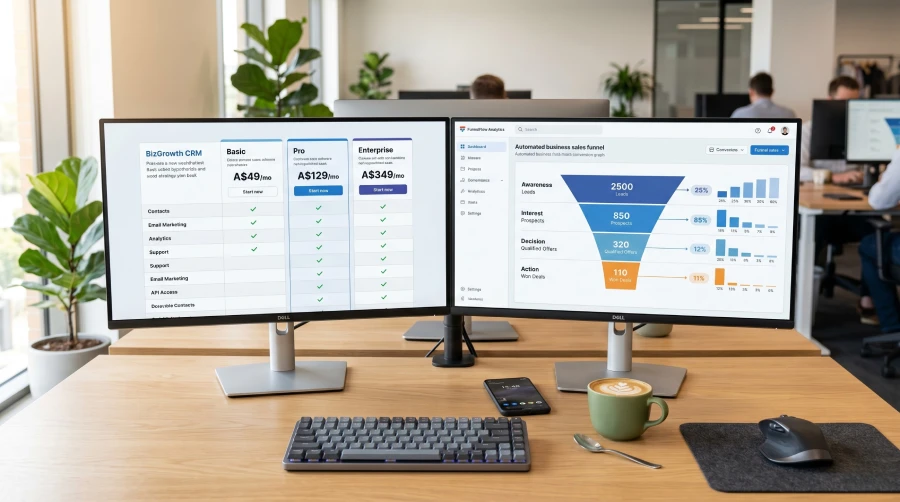
Buying Guide: Choosing Your Platform
Follow this step-by-step framework to select a system that actively scales your business operations:
- Map Your True Bottleneck: Define whether your primary operational leak is initial lead generation, slow follow-up speeds, or disjointed internal department communication.
- Verify Local System Compatibility: Ensure the software communicates natively out of the box with your current email client, calendar apps, and local Australian business tools.
- Utilise Trial Periods Fully: Sign up for standard introductory offers. If your sales team cannot comfortably navigate the system within forty-eight hours, daily adoption will likely fail.
- Confirm Mobile Performance: Test the speed, responsiveness, and offline logging capabilities of the platform’s mobile app to properly support remote workers.
Final Thoughts – Choosing The Best CRM For Aussie Businesses
Whether your company requires a specialised CRM for real estate or a highly flexible system to manage digital sales, centralising your customer touchpoints is a non-negotiable step toward modern business growth. While beginning your journey with the best free CRM small business software can provide temporary relief from spreadsheet disorganization, investing in a paid, automated tier ultimately unlocks true pipeline visibility and predictable revenue growth. Take the time to evaluate different interfaces, choose the best free CRM option for initial validation if needed, and deploy a robust platform that empowers your team to close deals faster.
Our top picks for July 2026
Frequently Asked Questions
Q. What are the primary functional limitations of free CRM software?
A. Most free options enforce strict caps on total contact storage limits, restrict integration access, and block automated workflows. Moving to a paid subscription removes these functional bottlenecks and allows for total workflow automation.
Q. Why should an agency choose specific real estate software over a generic system?
A. Tailored real estate options allow agents to connect property listing details directly to buyer profiles, log property open-house attendance, and track contracts within a single dashboard, saving hours of manual admin work.
Q. Can I easily migrate my customer data from free crm tools to a paid tier later?
A. Yes. Major software vendors provide built-in migration wizards that ingest clean CSV files, allowing you to easily scale your software infrastructure upward as your commercial requirements expand.
Q. How many user accounts are generally allowed on a free small business CRM?
A. Most basic free plans restrict system access to between one and three individual users. If your business employs an expanding sales, admin, or support team, transitioning to a paid plan is required.
